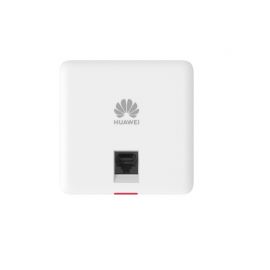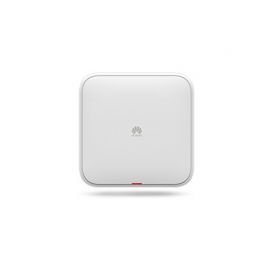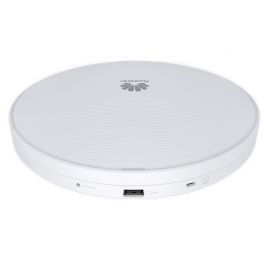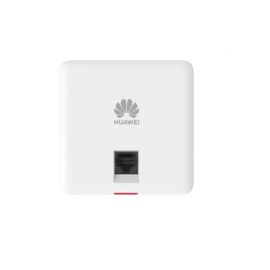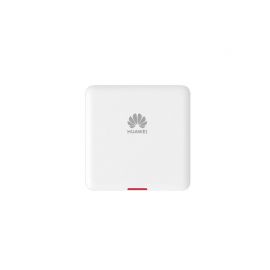
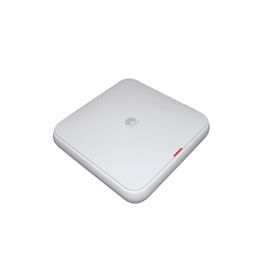
AP4050DE-M

Call for Price

Call For Price

Availability: In stock

Detail :

Huawei AP4050DE-M 802.11ac Wave 2 Access Point, 2 x 2 MIMO, two spatial streams, Built-in dual-band smart omnidirectional antenna

Condition : New Factory Sealed

Models : AP4050DE-M - Huawei Indoor Access Point

Get A Quote
Categories: , , Brand:

Warranty : Warranty Icon

Shipping : Shipping Icon Fast & Secure

Payments : Payment Methods

Certification : Certifications

Connect the Internet More Convenient with Wireless Products.
Choose various wireless products to build a WiFi network, including access points, controllers, etc.

WiFi 6 AP   

802.11ac Wave 2 AP   

Outdoor AP   

WLAN Controllers

Check Now

AP4050DE-M Overview

Huawei AP4050DE-M is an 802.11ac Wave 2 access point (AP) that supports 2×2 MIMO and two spatial streams. It provides comprehensive service support capabilities and features high reliability, high security, simple network deployment, automatic AC discovery and configuration, and real-time management and maintenance, which meets network deployment requirements. The AP has built-in smart antennas and supports smooth evolution from 802.11n to 802.11ac and can provide gigabit access for wireless users. 

Quick Spec

Table 1 shows the Quick Specs.

Product Code

AP4050DE-M

Dimensions (H x W x D)

45 mm x 200 mm x 200 mm

Interface type

1 x 10/100/1000M self-adaptive Ethernet interface (RJ45)

1 x Management console port (RJ45)

Built-in Bluetooth

BLE5.0

LED indicator

Indicates the power-on, startup, running, alarm, and fault states of the system.

Power input l

 DC: 12 V 10%

 PoE power supply: in compliance with IEEE 802.3at

Maximum power consumption


16.3 W

NOTE

The actual maximum power consumption depends on local laws and regulations.

Maximum number of SSIDs for each radio

16

Maximum number of users


512

NOTE

The actual number of users varies according to the environment.

Product Details

Huawei AP4050DE-M provides these features:

 802.11ac Wave 2 standards compliance, MU-MIMO (2SU-2MU), delivering services simultaneously on 2.4G and 5G radios, at a rate of up to 400 Mbit/s at 2.4 GHz, 867 Mbit/s Mbit/s at 5 GHz, and 1.267 Gbit/s for the device.

 Smart antenna array technology enables targeted signal coverage for mobile terminals, reduces interferences, and improves signal quality. Additionally, it implements millisecond-level switchover as STAs move.

 Built-in Bluetooth 5.0, increasing the working distance and working with eSight to accurately locate Bluetooth terminals.

 Supports the Fat, Fit, and cloud modes and enables Huawei cloud-based management platform to manage and operate APs and services on the APs, reducing network O&M costs

Compare to Similar Items

Table 2 shows the comparison.

Product Code

AP4050DE-M

AP4151DN

Dimensions (H x W x D)

45 mm x 200 mm x 200 mm

35mm x 170mm x 170mm

Interface type

1 x 10/100/1000M self-adaptive Ethernet interface (RJ45)

1 x Management console port (RJ45)

2 x 10/100/1000M self-adaptive Ethernet interface (RJ45)

Console interfaceRJ45 x 1

1 x USB interface

Built-in Bluetooth

BLE5.0

Power input

 DC: 12 V 10%

 PoE power supply: in compliance with IEEE 802.3at

DC: 12 V 10%

PoE power supply: in compliance with IEEE 802.3af/at (not support USB when in 802.3af)

Maximum power consumption

16.3 W

12.3W (excluding the output power of the USB port)

Antenna type

Built-in dual-band smart antenna

External antennas(horizontal beamwidth 360)

Antenna gain

2.4GHz: 4.5dBi

5GHz: 6dBi

3.5 dBi (2.4 GHz); 4 dBi (5 GHz)

Get More Information

Do you have any question about the AP4050DE-M

Contact us now via

Live Chat or sales@netseg.me.
Be the first to review “AP4050DE-M”

Your email address will not be published. Required fields are marked *

Reviews

There are no reviews yet.

Customer Reviews

(0)
5 stars
4 stars
3 stars
2 stars
1 stars

No reviews yet.

×

Write a Review

AP4050DE-M Specification

AP4050DE-M Specification

Dimensions (H x W x D)

45 mm x 200 mm x 200 mm

Weight

0.7 kg

Interface type

1 x 10/100/1000M self-adaptive Ethernet interface (RJ45)

1 x Management console port (RJ45)

Built-in Bluetooth

BLE5.0

LED indicator

Indicates the power-on, startup, running, alarm, and fault states of the system.

Power input l

 DC: 12 V 10%

 PoE power supply: in compliance with IEEE 802.3at

Maximum power consumption


16.3 W

NOTE

The actual maximum power consumption depends on local laws and regulations.

Operating temperature

10C to +50C

Storage temperature

40C to +70C

Operating humidity

5% to 95% (non-condensing)

Dustproof and waterproof grade

IP41

Altitude

60 m to +5000 m

Atmospheric pressure

53 kPa to 106 kPa

Antenna type

Built-in dual-band smart antenna

Antenna gain

2.4GHz: 4.5dBi

5GHz: 6dBi

NOTE

 The gains above are the single-antenna peak gains.

 The equivalent antenna gain after all 2.4 GHz or 5 GHz antennas are combined is 3dBi in 2.4 GHz or 3dBi in 5 GHz.

Maximum number of SSIDs for each radio

16

Maximum number of users


512

NOTE

The actual number of users varies according to the environment.

Maximum transmit power


2.4G: 27 dBm (combined power)

5G: 27 dBm (combined power)

NOTE

The actual transmit power depends on local laws and regulations.

Power increment

1 dBm

Maximum number of non-overlapping channels


2.4 GHz (2.412 GHz to 2.472 GHz)

 802.11b/g

20 MHz: 3

 802.11n

20 MHz: 3

40 MHz: 1

5 GHz (5.18 GHz to 5.825 GHz)

 802.11a

20 MHz: 13

 802.11n

20 MHz: 13

40 MHz: 6

 802.11ac

20 MHz: 13

40 MHz: 6

80 MHz: 3

NOTE

The table uses the number of non-overlapping channels supported by China as an example. The number of non-overlapping channels varies in different countries. For details, see the Country Codes & Channels Compliance.

Channel rate supported

l

 802.11b125.5 11Mbit/s

 802.11a/g691218243648 and 54Mbit/s

 802.11n6.5400Mbit/s

 802.11ac wave26.5867Mbit/s

Receiver sensitivity (Typical values)

 2.4 GHz 802.11b : -103 dBm @ 1 Mbit/s -95 dBm @ 11 Mbit/s

 2.4 GHz 802.11g : -96 dBm @ 6 Mbit/s -80 dBm @ 54 Mbit/s

 2.4 GHz 802.11n (HT20): 96 dBm @ MCS0 -75 dBm @ MCS15

 2.4 GHz 802.11n(HT40): -94 dBm @ MCS0 -73 dBm @ MCS15

 5 GHz 802.11a : -94 dBm @ 6 Mbit/s -79 dBm @ 54 Mbit/s

 5 GHz 802.11n (HT20): -90 dBm @ MCS0 -74 dBm @ MCS15

 5 GHz 802.11n (HT40): -91 dBm @ MCS0 -72 dBm @ MCS15

 5 GHz 802.11ac (VHT20): -94 dBm @ MCS0NSS1 -70 dBm @ MCS8NSS2

 5 GHz 802.11ac (VHT40): -92 dBm @ MCS0NSS1 -67 dBm @ MCS9NSS2

 5 GHz 802.11ac (VHT80): -89 dBm @ MCS0NSS1 -64 dBm @ MCS9NSS2

Safety standards

 UL 60950-1

 CAN/CSA 22.2 No.60950-1 l

 IEC 60950-1 l

 EN 60950-1 l

 GB 4943

Radio standards

 ETSI EN 300 328

 ETSI EN 301 893

 China's SRRC document [2002] No. 353

 China's SRRC document [2002] No. 277

 China's SRRC document [2012] No. 620

 FCC Part 15C: 15.247

 FCC Part 15C: 15.407

 RSS-210

 AS/NZS 4268

EMC standards l

 EN 301 489-1 l

 EN 301 489-17

 ETSI EN 60601-1-2 l

 FCC Part 15

 ICES-003

 YD/T 1312.2-2004

 ITU k.20

 GB 9254

 GB 17625.1

 AS/NZS CISPR22

 EN 55022

 EN 55024

 CISPR 22

 CISPR 24

 IEC61000-4-6 l

 IEC61000-4-2

IEEE standards


 IEEE 802.11a/b/g

 IEEE 802.11n

 IEEE 802.11ac

 IEEE 802.11h

 IEEE 802.11d

 IEEE 802.11e

 IEEE 802.11k

 IEEE 802.11u

 IEEE 802.11v

 IEEE 802.11w

 IEEE 802.11r

Security standards

 802.11i, Wi-Fi Protected Access 2(WPA2), WPA

 802.1X

 Advanced Encryption Standards(AES)Temporal Key Integrity Protocol(TKIP)

 EAP Type(s)

EMF l

 CENELEC EN 62311

 CENELEC EN 50385

 OET65

 RSS-102

 FCC Part1&2

 FCC KDB series

RoHS l

Directive 2002/95/EC & 2011/65/EU

Reach l

Regulation 1907/2006/EC

WEEE

Directive 2002/96/EC & 2012/19/EU


Categories