

 Fast & Secure




C2911-VSEC-CUBE/K9 Overview
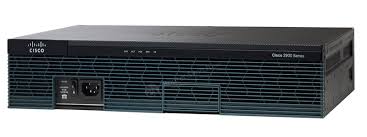
C2911-VSEC-CUBE/K9 is the Cisco 2911 router with Voice Sec and CUBE Bundle, including PVDM3-16, UC and SEC License PAK, and FL-CUBEE-25.
Quick Specs
Table 1 shows the Quick Specs of the C2911-VSEC-CUBE/K9.
| Product Code | C2911-VSEC-CUBE/K9 |
| Bundle | C2911 VSEC CUBE Bundle, PVDM3-16, UC SEC Lic, FL-CUBEE-25 |
| Rack Units | 2RU |
| Interfaces | 3 integrated 10/100/1000 Ethernet ports (RJ-45 only) |
| Expansion Slot(s) | 1 service module slot
1 Internal Service Module slot 2 onboard digital signal processor (DSP) slots 4 enhanced high-speed WAN interface card slots |
| RAM | 512 MB (installed) / 2 GB (max) |
| Flash Memory | 256 MB (installed) / 8 GB (max) |
| Dimensions | 43.8 cm x 30.5 cm x 8.9 cm |
Product Details
C2911-VSEC-CUBE/K9 provides Voice Sec and CUBE bundle.
Table 2 shows the Voice Security Bundle Features.
| Authentication and Encryption Features |
Media encryption of voice RTP streams using SRTP
Exchange of RTP Control Protocol (RTCP) information using secure RTCP SRTP to RTP fallback for calls between secure and insecure endpoints Secure calls supported in Cisco Unified Survivable Remote Site Telephony (SRST) mode during WAN failover Compressed RTP (CRTP) supported with media encrypted calls using SRTP |
| Authentication and Encryption Algorithm |
Supports AES-128 encryption algorithm
Supports the HMAC secure hash authentication algorithm (SHA 1) |
| Signaling Authentication and Encryption Features | Gateway to Cisco Unified Communications Manager signaling and encryption uses IPSec for Media Gateway Control Protocol (MGCP), H.323 and SIP gateways
IP phone to Cisco Unified Survivable Remote Site Telephony router signaling and encryption uses TLS |
| Protocol Support | MGCP 0.1 (supports MGCP gateways with Cisco Unified Communications Manager)
H.323 (supported on H.323 gateways and CUBE; Cisco Unified Communications Manager interoperability is optional) Session Initiation Protocol (SIP) SCCP (Cisco Unified IP Phone) in SRST mode |
| Module Support | Any module that has PVDM2, PVDM3 and/or built-in DSP |
| Codec Support | G.711, G.729A, and G.729 |
Table 3 shows the Cisco Unified Border Element Features (CUBE Versions Include 9.5.1Later).
| Feature | Support Details |
| Protocols | H.323 and SIP |
| Protocol and signal interworking | H.323 to H.323 (including Cisco Unified Communications Manager)
H.323 to SIP (including Cisco Unified Communications Manager) SIP to SIP (including Cisco Unified Communications Manager) SIP to SIP (including Cisco TelePresence calls) |
| Media support | RTP, RTCP, and Binary Floor Control Protocol (BFCP)
Sub-RTCP for media statistics |
| Media interworking | SIP delayed-offer to SIP early-offer interworking for audiovideo calls
H.323 Slow Start to H.323 Fast Start for audio calls |
| Media modes | Media flow-through
Media flow-around |
| Signaling transport mode | TCP
User Datagram Protocol (UDP) TCP-to-UDP interworking |
| Fax support | T.38 fax relay
Fax pass-through Fax over G711 |
| Modem support | Modem pass-through
Modem over G711 |
| Dual-tone multifrequency (DTMF) | H.245 alphanumeric
H.245 signal RFC 2833 SIP notify Key Press Markup Language (KPML) Interworking capabilities include: H.323 to SIP RFC 2833 to G.711 in-band DTMF * Various SIP-to-H.323 DTMF interworking options RFC 2833 to KPML |
| Supplementary services | Call hold, call transfer, and call forwarding for H.323 networks using H.450 and transparent passing of Empty Capability Set (ECS)
SIP-to-SIP supplementary services (holds and transfers) support using REFER SIP-to-SIP supplementary services (holds and transfers) support using REINVITE H.323-to-SIP supplementary services for Cisco Unified Communications Manager with media termination point (MTP) on the H.323 trunk |
| Internetworking | Configurable SIP profiles to manipulate SIP message content, including header fields andSession Descriptor Protocol (SDP) attributes
P-Asserted-Identity (PAI), P-Preferred-Identity (PPI), and Remote-Part-ID (RPID) internetworking** Unsupported Multipurpose Internet Mail Extensions (MIME)-type attachment pass-through** Unsupported SIP header pass-through** Dial-peer bind (allows Cisco Unified Border Element to connect to multiple different service providers) Incoming dial-peer match based on remote IP address Assisted RTCP for Microsoft Lync Interoperability |
| Call routing and dialing options | E164-based dialing
Uniform Resource Identifier (URI)-based dialing Routing based on nonsequential lists (either E164URIboth) Dial Peer Groups (Trunk Groups) (outbound routing determined by inbound dial pattern) Server Groups to define order of selection of alternativebackup routing paths for outbound routing |
| Cisco Call Admission Control (CAC) | Maximum number of calls per trunk (maximum number of calls)
CAC based on IP circuits CAC based on total calls, CPU use,memory use threshold CAC based on bandwidth availability and call-spike detection Resource Reservation Protocol (RSVP) |
| OPTIONS SIP message support | Support for response to OPTIONS-PING messages with OPTION- PING groups based on session target
Support for generation of in-dialog OPTIONS-PING messages Support for generation of out-of-dialog OPTIONS-PING messages to control dial-peer status** |
| Media recording | Media forking features for both voice and video to integrate with Cisco TelePresence Media Recording Servers
Active (SIP-based) and passive (application programming interface [API]-based) mechanisms for invoking media forking |
| IP Routing feature | Support for Cisco IOS Software-based routing features, including Border Gateway Protocol (BGP), Enhanced IGRP (EIGRP), and Multiprotocol Label Switching (MPLS)
Support for Cisco IOS Software-based policy routing features Support for Cisco IOS Software-based access-control-list (ACL) features |
| Voice-quality statistics | Packet loss, jitter, and round-trip time (RTT)
Per-call leg call-quality statistics Flexible NetFlow call-quality statistics and information Sub-RTCP statistics collection |
| QoS | IP Precedence and differentiated-services-code-point (DSCP) marking
Per-call QoS packet marking |
| Network Address Translation (NAT) traversal | NAT traversal support for SIP phones deployed behind non-Application Line Gateway (ALG) data routers
Stateful NAT traversal IPv4-to-IPv6 translation |
| Network hiding | IP network privacy and topology hiding
IP network security boundary Intelligent IP address translation for call media and signaling Back-to-back user agent, replacing all SIP-embedded IP addressing History information-based topology hiding and call routing |
| Number translation | Number translation rules for voice-over-IP (VoIP) numbers
URI-based dialing translations |
| Codes | G.711 mu-law and a-law
G.722 and G.722.2 G.723ar53, G.723ar63, G.723r53, and G.723r63 G.726r16, G.726r24, and G.726r32 G.728 G.729, G.729A, G.729B, and G.729AB Internet Low Bitrate Codec (iLBC) Midcall codec renegotiation Adaptive Multirate (AMR) wideband AAC-LD |
| Transcoding | Transcoding between any two different families of codecs from the following list:
G.711 a-law and mu-law G.729, G.729A, G.729B, and G.729AB iLBC G.722 Midcall transcoder insert and drop |
| Security | Rogue SIP invite and rogue RTP packet detection
Alerts for rogue packet activity IP Security (IPsec) Secure RTP (SRTP) Transport Layer Security (TLS) SRTP-to-RTP interworking |
| Authentication, authorization, and accounting (AAA) | AAA with RADIUS |
| Voice media applications | Tool Command Language (Tcl) scripts support for application customization
VoiceXML 2.0 script support for application customization Web-based API to monitor and control signaling and media traffic |
| API | Web-based API compatible with Web Service Description Language (WSDL) development tools to support call monitoring and control, call-detail records (CDRs), and serviceability attribute interaction with external application; specifically designed for voice-policy applications |
| Billing | Standard CDRs for accurate billing available through:
AAA records Syslog Simple Network Management Protocol (SNMP) |
| Lawful intercept | Provision of replicated packets to third-party mediation device |
| Remote phone proxy sessions | Termination of SIP-TLS and SRTP with registration pass-through to allow SIP-based endpoints, including Cisco Unified IP Phone 7900, 8900, and 9900 models and Jabber Voice Client, to connect from remote sites through the Internet without requiring IPsec VPN to Cisco Unified Communications Manager, Cisco Business Edition,Cisco HCS (not included with NANOCUBE license) |
| Line-side back-to-back user agent NANOCUBE sessions | Termination of Cisco Shared Port Adapter (SPA) and other third-party SIP endpoints with registration passthrough and survivability for use with third-party hosted call-control service provider services |
| Inter-Cluster Lookup Service (ILS) routing | Support for ILS routing to complement ILS dial-plan exchange between Cisco Unified Communications Manager clustersto simplify call-routing complexity between multiple clusters |
| Video | |
| Protocols | H.323 and SIP |
| Cisco endpoints supported | Cisco Unified Video Advantage (UVA) and Cisco TelePresence endpoints |
| Rich media | Simultaneous support for data, audio, and video |
| Signaling interworking | SIP delayed-offer to SIP early-offer calls |
| Media | Support for multiplex RTP calls (for Cisco TelePresence solution)
Simple Traversal of UDP through NAT (STUN)/Datagram TLS (DTLS) pass-through for telepresence |
| H.323-enhanced features | H.235 pass-through for secure calls
H.239 pass-through for picture-in-picture feature |
| QoS | DSCP markings to prioritize video streams as they traverse the network |
| Data support | T.120 data collaboration flow-around only |
| Camera control | Far-end camera control (FECC) |
| Video codecs | H.261
H.263 H.264 |
| Network Management | |
| Manageability and serviceability | Resource usage monitoring over SIP trunk
SNMP per-call quality traps SNMP and syslog SIP trunk status messages |
| High Availability | |
| High availability | Inbox redundancy on Cisco ASR 1006
Box-to-box redundancy on Cisco ASR 1000 (based on RG Infrastructure) Box-to-box redundancy on Cisco ISRs (Hot Standby Router Protocol [HSRP]-based) Note: Media is preserved for active calls at time of failover in each redundancy configuration listed. |
Compare to Similar Routers
Table 4 shows the comparison of CISCO2911/k9 and C2911-VSEC-CUBE/K9.
| Model |
CISCO2911/k9 |
C2911-VSEC-CUBE/K9 |
| Bundle | N/A | C2911 VSEC CUBE Bundle, PVDM3-16, UC SEC Lic, FL-CUBEE-25 |
| Rack Units | 2RU | 2RU |
| Interfaces | 3 integrated 10/100/1000 Ethernet ports (RJ-45 only) | 3 integrated 10/100/1000 Ethernet ports (RJ-45 only) |
| Expansion Slot(s) | 1 service module slot
1 Internal Service Module slot 2 onboard digital signal processor (DSP) slots 4 enhanced high-speed WAN interface card slots |
1 service module slot
1 Internal Service Module slot 2 onboard digital signal processor (DSP) slots 4 enhanced high-speed WAN interface card slots |
Get more information
Do you have any question about the C2911-VSEC-CUBE/K9 router
Contact us now via
orders@netseg.me or .


Reviews
There are no reviews yet.