N5K-C5672UP

Call for Price

Call For Price

Availability: In stock

Detail :

Nexus 5672UP Chassis, 1RU, 32 p 10-Gbps SFP+, 16 Unified Ports, 6p 40G QSFP+

Condition : New Factory Sealed

Models : N5K-C5672UP - Cisco Nexus 5000 Series Switch

Get A Quote
Category: Brand:

Warranty : Warranty Icon

Shipping : Shipping Icon Fast & Secure

Payments : Payment Methods

Certification : Certifications


N5K-C5672UP Overview

Cisco Nexus 5672UP switch (N5K-C5672UP) is a compact 1RU (1 Rack Unit), high-performance, low-latency 1/10/40-Gigabit Ethernet, Fibre Channel, and Fibre Channel over Ethernet (FCoE) switch. It runs the industry-leading Cisco NX-OS Software operating system, providing features and capabilities that are widely deployed.

Quick Specs

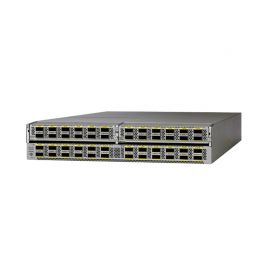
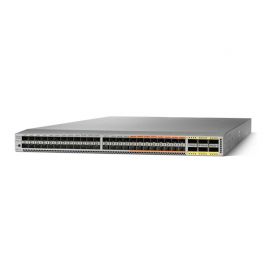
Figure 1 shows the appearance of N5K-C5672UP.

Table 1 shows the Quick Specs.

Product Code N5K-C5672UP
Performance Layer 2 and 3 hardware forwarding at 1.44 Tbps; 1071 mpps (64-byte packets)
Form factor 1-rack unit
Power Supplies two 1+1 redundant, hot-swappable power supplies
Fan Modules 3
Airflow supporting both port-side intake (red handle) and fan-side intake (blue handle) airflow options for flexible mounting
10 GE 48 ports
40 GE 6 true QSFP ports
Ports 48 fixed 1 Gigabit and 10 Gigabit Ethernet ports of which 16 ports can be unified ports (UP)
10 and 40 Gbps FCoE Yes
Hardware VXLAN Yes
NVGRE capable Yes
Latency 1 microsecond
Physical (height x width x depth) 1.75 x 17.3 x 30 in. (4.4 x 43.9 x 76.2 cm)
Weight 32 lb (2 power supplies)

Product Details

Figure 2 shows the front panel of N5K-C5672UP.

Note:

1/10G Ethernet SFP+ ports
16 x UP ports
6 x 40G QSFP ports

Figure 3 shows the back panel of N5K-C5672UP.

Note:

Power Supply 1+1 redundancy
Fan Module 2+1 redundancy
Mgmto/Console/USB

The Accessories

Table 2 shows the recommended elements for the N5K-C5672UP.

Category Model Description
QSFP Transceiver and Optics

QSFP-40G-LR4

QSFP 40GBASE-LR4 OTN Transceiver, LC, 10KM

QSFP-4SFP10G-CU5M

QSFP to 4xSFP10G Passive Copper Splitter Cable, 5m
SFP Transceiver and Optics


SFP-10G-SR

10GBASE-SR SFP Module

SFP-H10GB-CU5M

10GBASE-CU SFP+ Cable 5 Meter

Compare to Similar Items

Table 3 shows the comparison of N5K-C5672UP and N5K-C56128P.

Product Code N5K-C5672UP

N5K-C56128P

Form factor 1-rack unit 2-rack unit
Power Supplies two 1+1 redundant, hot-swappable power supplies four 2+2 redundant, hot-swappable power supplies
Airflow supporting both port-side intake (red handle) and fan-side intake (blue handle) airflow options for flexible mounting supporting both port-side intake (red handle) and fan-side intake (blue handle) airflow options.
Number of ports Up to 1152 with FEX 1152 with FEX
10 GE 48 ports Up to 96 wire-rate ports
40 GE 6 true QSFP ports Up to 8 QSFP ports
Unified ports 16 ports (Ethernet; FCoE; 2/4/8-gigabit FC) Up to 48 ports (Ethernet; FCoE; 2/4/8-gigabit FC)
10 and 40 Gbps FCoE Yes Yes
Hardware VXLAN Yes Yes
NVGRE capable Yes Yes
Latency 1 microsecond 1 microsecond

Get more information

Do you have any question about the N5K-C5672UP

Contact us now

orders@netseg.me.

Be the first to review “N5K-C5672UP”

Your email address will not be published. Required fields are marked *

Reviews

There are no reviews yet.

Customer Reviews

(0)
5 stars
4 stars
3 stars
2 stars
1 stars

No reviews yet.

×

Write a Review

N5K-C5672UP Specification

N5K-C5672UP Specifications

Form factor 1-rack unit
Number of ports Up to 1152 with FEX
10 GE 48 ports
40 GE 6 true QSFP ports
Unified ports 16 ports (Ethernet; FCoE; 2/4/8-gigabit FC)
10 and 40 Gbps FCoE Yes
Hardware VXLAN Yes
NVGRE capable Yes
Latency 1 microsecond
Performance     Layer 2 and 3 hardware forwarding at 1.44 Tbps; 1071 mpps (64-byte packets) Support for up to 256,000 combined entries of MAC addresses and Address Resolution Protocol (ARP) entries Low latency of approximately 1 microsecond using cut-through forwarding for predictable, consistent traffic latency regardless of packet size, traffic pattern, or features enabled on 10 and 40 Gigabit Ethernet interfaces 25-MB buffer per 12 x 10 Gigabit Ethernet SFP+ interfaces Line-rate traffic throughput on all ports in Layer 2 and 3 mode
Interfaces   48 fixed 1/10 Gigabit Ethernet SFP+ ports with 16 of the 48 ports being unified, and 6 fixed 40 Gigabit Ethernet QSFP+ ports with 10 and 40 Gigabit Ethernet FCoE support on all respective ports and 2/4/8-Gbps Fibre Channel on all the unified ports Expansion module: 24 SFP+ unified ports plus 2 x 40 Gigabit Ethernet QSFP+ ports Conversion of 40 Gigabit Ethernet ports to 10 Gigabit Ethernet interfaces through QSFP+ breakout cable Fabric extension through the Cisco Nexus 2200 and 2300 platforms
Layer 2 Features   Layer 2 switch ports and VLAN trunks IEEE 802.1Q VLAN encapsulation Support for up to 4000 VLANs Support for up to 4000 access control list (ACL) entries Rapid Per-VLAN Spanning Tree Plus (PVRST+) (IEEE 802.1w compatible) Multiple Spanning Tree Protocol (MSTP) (IEEE 802.1s): 64 instances Spanning Tree PortFast Spanning Tree root guard Spanning Tree Bridge Assurance Cisco EtherChannel technology (up to 16 ports per EtherChannel) Cisco vPC technology vPC configuration synchronization vPC shutdown Link Aggregation Control Protocol (LACP): IEEE 802.3ad Advanced port-channel hashing based on Layer 2, 3, and 4 information Jumbo frames on all ports (up to 9216 bytes) Pause frames (IEEE 802.3x) Storm control (unicast, multicast, and broadcast) Private VLANs Private VLAN over trunks (isolated and promiscuous) Private VLANs over vPC and EtherChannels VLAN remapping FabricPath EvPC and vPC+ with FabricPath Adapter FEX Data Center VM-FEX Support for up to 24 fabric extenders (Layer 2) with each Cisco Nexus 5672UP, 5672UP-16G, and 56128P Switch RDMA over Converged Ethernet (RoCE) using Data Center Bridging (DCB) support (DCB Exchange [DCBX] no drop and priority flow control [PFC])
Layer 3 Features   Layer 3 interfaces: Routed ports, switch virtual interface (SVI), port channels, subinterfaces, and port-channel subinterfaces Support for up to 32,000 IPv4 and 8000 IPv6 host prefixes Support for up to 8000 multicast routes (IPv4) Support for up to 8000 IGMP snooping groups Support for 4000 Virtual Routing and Forwarding (VRF) entries Support for up to 4096 VLANs Equal-Cost Multipathing (ECMP) up to 64 ways 4000 flexible ACL entries Routing protocols: Static, Routing Information Protocol Version 2 (RIPv2), Enhanced Interior Gateway Routing Protocol (EIGRP), Open Shortest Path First Version 2 (OSPFv2), Border Gateway Protocol (BGP), and Intermediate System-to-Intermediate System (IS-IS) IPv6 routing protocols: Static, OPFv3, BGPv6, and EIGRPv6 IPv6 VRF-lite BFD support: OSPFv2, BGPv4, EIGRP, and VRF instances Policy-Based Routing (IPv4 and IPv6) Hot-Standby Router Protocol (HSRP) and Virtual Router Redundancy Protocol (VRRP) IP direct broadcast vPC+ routing protocol peering ACL: Routed ACL with Layer 3 and 4 options to match ingress and egress ACL Multicast: Protocol Independent Multicast Version 2 (PIMv2) sparse mode, Source-Specific Multicast (SSM), Bidir-PIM, Multicast Source Discovery Protocol (MSDP), IGMPv2 and v3, and Multicast VLAN Registration (MVR) VRF: VRF-lite (IP VPN); VRF-aware unicast; and BGP-, OSPF-, RIP-, and VRF-aware multicast Unicast Reverse-Path Forwarding (uRFP) with ACL; strict and loose modes Jumbo frame support (up to 9216 bytes) Support for up to 24 fabric extenders on each Cisco Nexus 5600 10-Gbps platform switch
Quality of Service (QoS)   Layer 2 IEEE 802.1p (class of service [CoS]) 8 unicast queues and 8 multicast queues per port Per-port QoS configuration CoS trust Port-based CoS assignment Modular QoS CLI (MQC) compliance: IPv4 and IPv6 ACL-based QoS classification (Layers 2, 3, and 4) Flexible TCAM carving MAC and ARP hardware carving MQC CoS marking Per-port virtual output queuing CoS-based egress queuing Egress strict-priority queuing Egress port-based scheduling: Deficit Weighted Round-Robin (DWRR) Control-Plane Policing (CoPP): IPv4 and IPv6
Security   Ingress ACLs (standard and extended) on Ethernet and virtual Ethernet ports Standard and extended Layer 2 ACLs: MAC addresses, protocol type, etc. Standard and extended Layer 3 and 4 ACLs: IPv4 and IPv6, Internet Control Message Protocol (ICMP and ICMPv6), TCP, User Datagram Protocol (UDP), etc. Ingress policing VLAN-based ACLs (VACLs) Port-based ACLs (PACLs) Named ACLs Optimized ACL distribution ACLs on virtual terminals (vtys) ACL logging (IPv4 only) Dynamic Host Configuration Protocol (DHCP) snooping with Option 82 Dynamic ARP Inspection IP source guard DHCP relay (up to 32 destinations) Ethernet port security IPv6 RACL, PACL, and VACL iSCSI type-length-value (TLV)
High-Availability Features   Cisco In-Service Software Upgrade (ISSU) for Layer 2 Hot-swappable field-replaceable power supplies and fan modules N+1 and N+N power redundancy N+1 fan module redundancy
Management   Switch management using 10/100/1000-Mbps management or console ports CLI-based console to provide detailed out-of-band management In-band switch management Port-based locator and beacon LEDs Configuration synchronization Configuration rollback Secure Shell Version 2 (SSHv2) Telnet Authentication, authorization, and accounting (AAA) AAA with RBAC RADIUS TACACS+ Syslog (8 servers) Embedded packet analyzer SNMPv1, v2, and v3 (IPv4 and IPv6) Enhanced SNMP MIB support XML (NETCONF) support Remote monitoring (RMON) Advanced Encryption Standard (AES) for management traffic Unified username and passwords across CLI and SNMP Microsoft Challenge Handshake Authentication Protocol (MS-CHAP) Digital certificates for management between switch and RADIUS server Cisco Discovery Protocol Versions 1 and 2 RBAC SPAN on physical, PortChannel and VLAN ERSPAN Ingress and egress packet counters per interface Network Time Protocol (NTP) Cisco Generic Online Diagnostics (GOLD) Comprehensive bootup diagnostic tests Cisco Embedded Event Manager (EEM) Cisco Call Home Cisco Smart Call Home Default Interface Cisco Fabric Manager Cisco Prime DCNM CiscoWorks LAN Management Solution (LMS)
Data Center Bridging   CEE- and IEEE-compliant PFC (per-priority Pause frame support: IEEE 802.1Qbb) PFC link distance support: 20 km CEE-compliant DCBX Protocol CEE- and IEEE-compliant enhanced transmission selection
FCoE Features (Require Storage Services License)   T11 standards-compliant FCoE (Fibre Channel-BB-5) T11 FCoE Initialization Protocol (FIP) (Fibre Channel-BB-5) Any 10 or 40 Gigabit Ethernet port configurable as FCoE SAN administration separate from LAN administration Fibre Channel forwarding (FCF) Fibre Channel enhanced port types: VE, VF and VNP Direct attachment of FCoE targets Fabric Device Management Interface (FDMI) Fibre Channel ID (FCID) persistence Distributed device alias services In-order delivery Port tracking Cisco FCoE NPV technology N-port identifier virtualization (NPIV) Fabric services: Name server, registered state change notification (RSCN), login services, and name-server zoning Per-VSAN fabric services Cisco Fabric Services Distributed device alias services Host-to-switch and switch-to-switch Fibre Channel-SP authentication Fabric Shortest Path First (FSPF) Standard zoning Enhanced zoning Cisco Fabric Analyzer Cisco DCNM-SAN Storage Management Initiative Specification (SMI-S) Boot from SAN over vPC and Enhanced vPC (EvPC) FCP VSAN trunking Fabric Device Management Interface (FDMI) Fibre Channel ID (FCID) persistence Distributed device alias services In-order delivery Port tracking Cisco NPV technology Fabric binding for Fibre Channel Port security Fibre Channel traceroute Fibre Channel ping Fibre Channel debugging

SNMP MIBs

Generic MIBs   SNMPv2-SMI CISCO-SMI SNMPv2-TM SNMPv2-TC IANA-ADDRESS-FAMILY-NUMBERS-MIB IANAifType-MIB IANAiprouteprotocol-MIB HCNUM-TC CISCO-TC SNMPv2-MIB SNMP-COMMUNITY-MIB SNMP-FRAMEWORK-MIB SNMP-NOTIFICATION-MIB SNMP-TARGET-MIB SNMP-USER-BASED-SM-MIB SNMP-VIEW-BASED-ACM-MIB CISCO-SNMP-VACM-EXT-MIB
Layer 3 MIBs   UDP-MIB TCP-MIB OSPF-MIB BGP4-MIB CISCO-HSRP-MIB
Ethernet MIBs   CISCO-VLAN-MEMBERSHIP-MIB CISCO-Virtual-Interface-MIB CISCO-VTP-MIB
Configuration MIBs   ENTITY-MIB IF-MIB CISCO-ENTITY-EXT-MIB CISCO-ENTITY-FRU-CONTROL-MIB CISCO-ENTITY-SENSOR-MIB CISCO-FLASH-MIB CISCO-SYSTEM-MIB CISCO-SYSTEM-EXT-MIB CISCO-IP-IF-MIB CISCO-IF-EXTENSION-MIB CISCO-SERVER-INTERFACE-MIB CISCO-NTP-MIB CISCO-IMAGE-MIB CISCO-IMAGE-CHECK-MIB CISCO-IMAGE-UPGRADE-MIB CISCO-CONFIG-COPY-MIB CISCO-ENTITY-VENDORTYPE-OID-MIB CISCO-BRIDGE-MIB
Monitoring MIBs   DIFFSERV-DSCP-TC NOTIFICATION-LOG-MIB DIFFSERV-MIB CISCO-CALLHOME-MIB CISCO-SYSLOG-EXT-MIB CISCO-PROCESS-MIB RMON-MIB CISCO-RMON-CONFIG-MIB CISCO-HC-ALARM-MIB LLDP-MIB
Security MIBs   CISCO-AAA-SERVER-MIB CISCO-AAA-SERVER-EXT-MIB CISCO-COMMON-ROLES-MIB CISCO-COMMON-MGMT-MIB CISCO-RADIUS-MIB CISCO-SECURE-SHELL-MIB TCP/IP MIBs INET-ADDRESS-MIB TCP-MIB CISCO-TCP-MIB UDP-MIB IP-MIB CISCO-IP-PROTOCOL-FILTER-MIB CISCO-DNS-CLIENT-MIB CISCO-PORTSECURITY-MIB
Miscellaneous MIBs   START-MIB CISCO-LICENSE-MGR-MIB CISCO-FEATURE-CONTROL-MIB CISCO-CDP-MIB CISCO-RF-MIB CISCO-ETHERNET-FABRIC-EXTENDER-MIB CISCO-BRIDGE-MIB CISCO-FCOE-MIB CISCO-PORTCHANNEL-MIB CISCO-ZS-MIB

Standards

Industry Standards   IEEE 802.1D: Spanning Tree Protocol IEEE 802.1p: CoS prioritization IEEE 802.1Q: VLAN tagging IEEE 802.1Qaz: Enhanced transmission selection IEEE 802.1Qbb: Per-priority Pause IEEE 802.1s: Multiple VLAN instances of Spanning Tree Protocol IEEE 802.1w: Rapid reconfiguration of Spanning Tree Protocol IEEE 802.3: Ethernet IEEE 802.3ad: LACP with fast timers IEEE 802.3ae: 10 Gigabit Ethernet IEEE 802.3ba: 40 Gigabit Ethernet (Applies to 40G SR4, SR4-S, LR4, LR4-S, and CSR4 optics only) SFF 8431 SFP+ CX1 support RMON

Categories